
The Quiet Architecture of Cross-Border Neighbourhoods
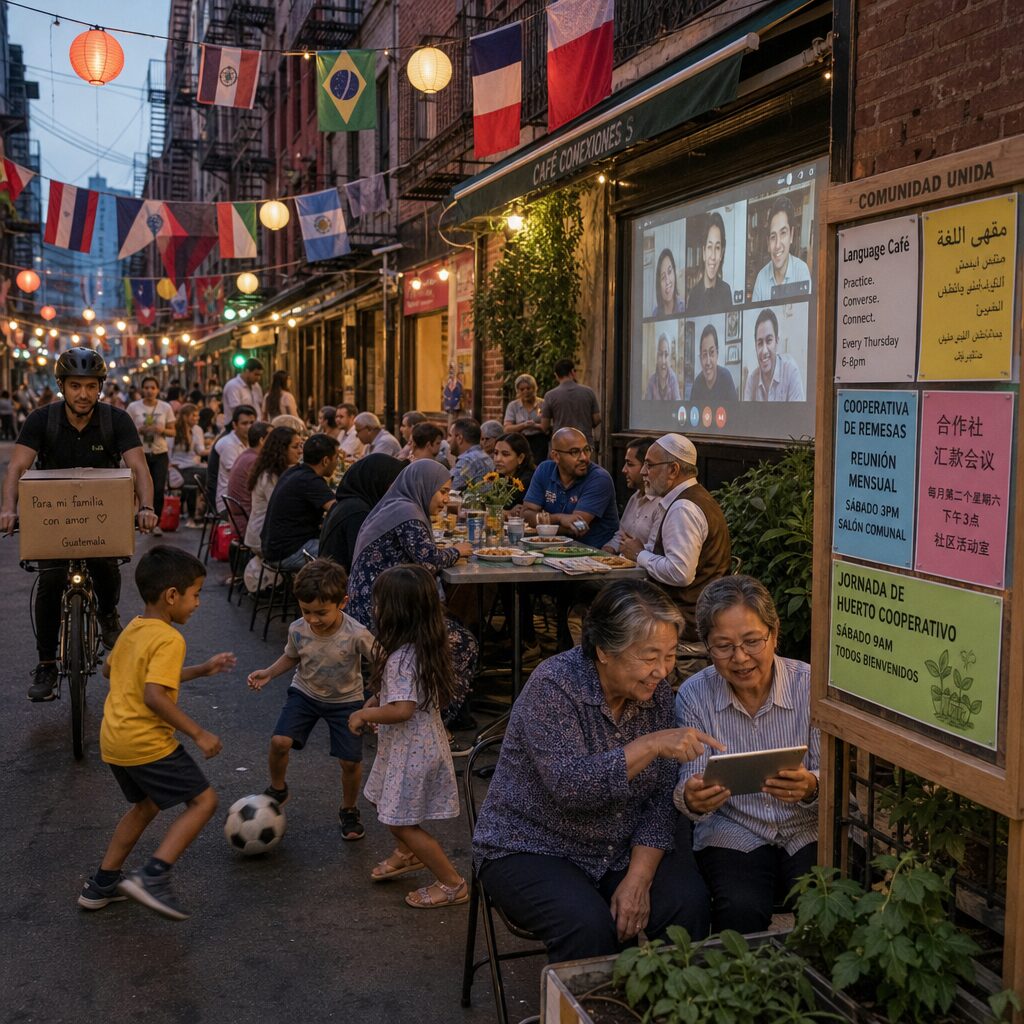
When people think of ‘international’ they picture embassies, airlines and trade deals. Less noticed is the subtle architecture that migrants, travel workers and transnational students build to make new places feel like home. These are not grand institutions but quotidian practices: shared meals on apartment stairwells, weekend language cafés, informal childcare rotations across three countries’ schedules. Such practices stitch together disparate geographies into functioning neighbourhoods.
This architecture relies on mobility as an asset rather than a problem. Seasonal workers maintain gardens in one country and send seeds back to relatives; digital-first freelancers host co-working dinners that double as advice clinics for visa paperwork. The result is a patchwork of overlapping loyalties — civic in one place, familial in another — that produces resilience. Urban planners and community groups are beginning to recognise this: initiatives that map these informal networks reveal how a single migrant household can act as a micro-hub, circulating goods, information and emotional labour across borders.
Remittances Reimagined: From Cash Transfers to Community Capital
Remittances have long been measured in economic terms: dollars, euros, ringgit. A newer tendency reframes them as community capital. Rather than one-way transfers, migrants increasingly route funds into collective enterprises back home: cooperative farms, microschools, and local health clinics. These pooled investments are deliberate attempts to create shared infrastructure that elevates whole communities rather than individual households.
Digital platforms and fintech innovations have accelerated this trend. Apps allow diaspora groups to crowdfund a school renovation, track expenditure transparently, and issue community bonds. Some projects even internationalise governance: committees split decision-making between those living locally and those abroad, leveraging diverse expertise and stabilising institutions that might otherwise depend on a single benefactor. This shift reframes ‘international money’ as catalytic social capital.
Language as a Public Good: Polyglot Spaces and Civic Participation
Language is frequently cast as a barrier to integration, yet multilingualism can be a bridge that strengthens civic life. Cities with polyglot services — multilingual polling information, translated council minutes, and migrant-led debate clubs — report higher engagement rates. Rather than forcing assimilation, such practices recognise linguistic diversity as a resource for richer public discourse.
Several municipalities have piloted ‘language hubs’ where interpreters, legal advisers and cultural mediators collaborate. These hubs do more than translate words: they decode institutional cultures, making it easier for newcomers to navigate healthcare, housing and education. The international dimension arises when volunteers from different countries share approaches to participatory budgeting or dispute resolution, transplanting methods that are then adapted locally. In this way language becomes an instrument of civic design.
Digital Diasporas: Building Virtual Commons with Real-World Impact
Online communities have matured beyond fan forums and professional networks. Digital diasporas—groups formed around nationality, ethnicity or place of origin—now run mentorship schemes, emergency response teams and mental-health mutual aid. They mobilise across time zones, turning global connectivity into practical community support.
During crises, these networks coordinate cross-border logistics: sourcing medicines, fundraising for medical evacuations, or matching skilled volunteers with urgent needs. Platforms like WhatsApp groups, Discord servers and diaspora-specific portals often outperform formal channels in speed and cultural fluency. The international element is crucial: expertise and resources flow from multiple jurisdictions, and communities learn to resolve legal, medical and bureaucratic problems by combining diverse international experiences.
Sport, Festivals and Small Rituals: Cultural Exchange as Community Glue
Soft diplomacy thrives at neighbourhood level. Local football tournaments with teams made up of immigrants and long-term residents, intercultural street festivals, and hybrid ritual practices forge trust more effectively than top-down programmes. These events generate a shared repertoire of experiences — inside jokes, recipe swaps, collaborative songs — that become the social fabric of a place.
Importantly, these rituals are often improvisational and reciprocal: a midsummer celebration might acquire a new dance introduced by recent arrivals, while a migration anniversary could be observed in a different calendar month because of another community’s influence. This improvisation is a creative engine: cultural forms mutate, producing civic practices that are recognisably local but unmistakably international.
Policy Lessons: From Border Walls to Bridge-Building
If international flows are good at building communities, policy should shift from containment to facilitation. Practical measures include recognising foreign professional qualifications, funding transnational civic projects, supporting cross-border remittance cooperatives, and ensuring multilingual public services. Cities and regions that adopt such measures report stronger neighbourhood cohesion and lower social isolation.
Crucially, policy must treat diasporas as partners rather than problems. Many successful initiatives began as grassroots experiments — migrant-run clinics, language cafés, community savings groups — which later scaled with modest public investment. Governments can accelerate community-building by providing legal frameworks, small grants and platforms for international advisory exchange. The most resilient communities will be those that design their civic life in recognition of the international ties already at their core.