
The New Diplomats: Cities, Corporations and Algorithms
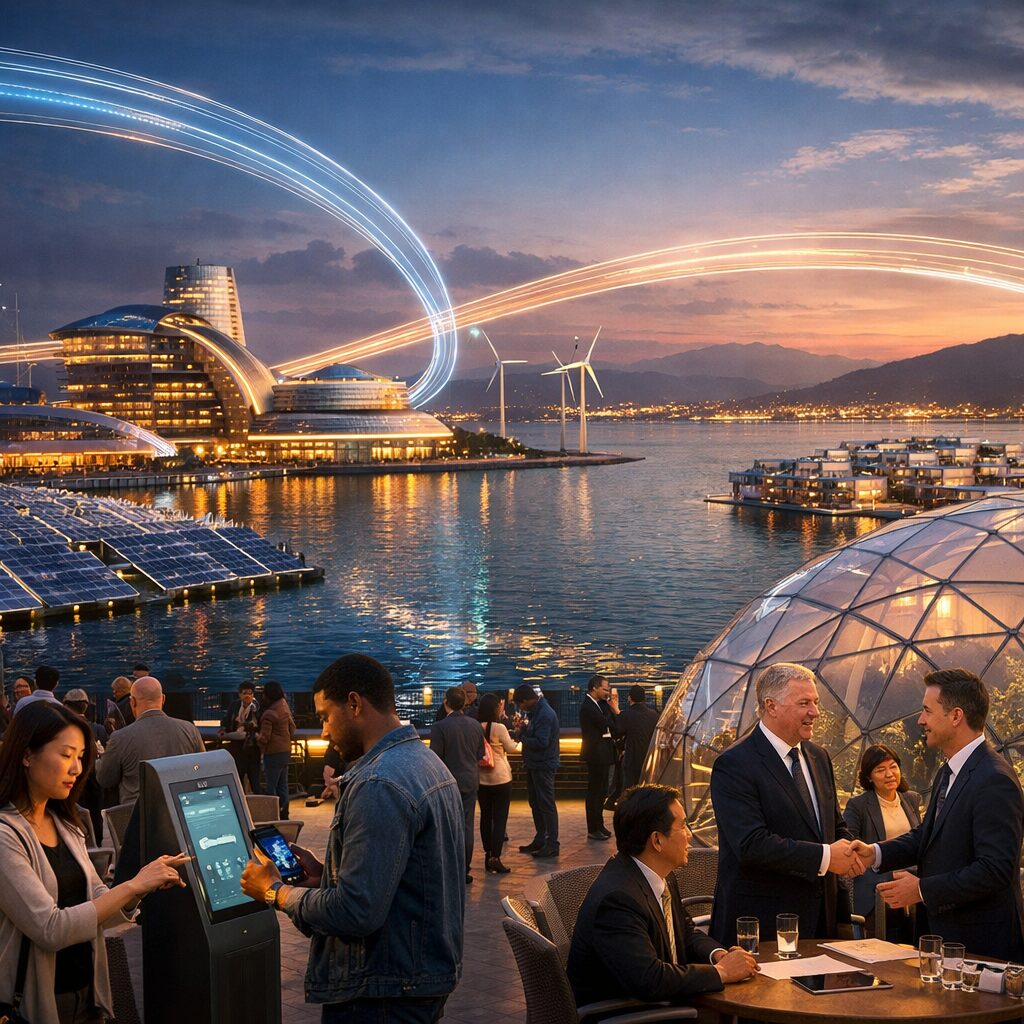
International relations are shifting away from nation-states as sole protagonists. In the coming decade, mayors, multinational corporations and autonomous systems will increasingly sit at negotiation tables previously reserved for foreign ministries. Cities are forming transnational alliances — think ‘Barcelona + Singapore’ climate pacts — that deliver trade, talent and resilience faster than national treaties can. These urban networks act like agile embassies, trading public services and regulatory frameworks in modular agreements.
Meanwhile, corporations are no longer merely economic actors; they are quasi-sovereign providers of cross-border infrastructure — energy grids, satellite communications, and payment rails — shaping the practical experience of being ‘international’. Expect corporate rulebooks and standards to compete with national law in sectors from data privacy to transport. Layered on top of both is the rise of algorithmic intermediaries: AI negotiators and smart-contract diplomacies that can implement and enforce agreements across jurisdictions instantly. The challenge will be legitimacy — who regulates the regulators when they are non-state and code-based?
Borders Unbundled: From Territorial Lines to Service Corridors
The future of international borders looks less like fences and more like configurable service corridors. Rather than binary entry/exit controls, borders will become multiplexed interfaces offering differentiated access: health corridors that screen for disease; climate corridors that manage seasonal relocation; digital corridors granting data portability and remote work rights. Such unbundling allows mobility to be calibrated to risk, reciprocity and economic value.
That said, technology enabling porous borders — biometric IDs, decentralised identity wallets, cross-border permits managed by blockchain — also creates new power asymmetries. Those who control the infrastructure of these corridors will wield outsized influence over who moves, who trades, and who benefits. The politics of infrastructure will therefore become the politics of internationalism itself.
Global Citizens: Identity, Mobility and the Rise of Layered Passports
The concept of a single national passport is giving way to layered citizenship. Future citizens will hold multiple, complementary credentials: a nationality, a city membership, a profession-based mobility token, and perhaps a climate-resettlement entitlement. These layered passports reflect lived realities — digital nomads, displaced communities, diaspora entrepreneurs — and create flexible claims to rights and services across borders.
This pluralisation of identity will produce both inclusion and stratification. On the one hand, modular rights can extend labour mobility and social protection to those excluded by traditional immigration regimes. On the other hand, they risk creating ‘tiered cosmopolitanism’ where mobility privileges become marketable commodities. Policy debates will pivot on whether rights are universal entitlements or tradable utilities.
The Climate of Cooperation: Experimental Treaties and Migration Infrastructure
Climate change is the accelerant that will force international innovation. Rather than grand, slow-moving agreements, we will see a proliferation of experimental, time-bound treaties: seed-city agreements for climate refugees, regional carbon-sharing pacts, and adaptive fishing accords that change with ocean temperatures. These experiments will be judged by agility and measurability rather than formality.
Crucially, the practical side of internationalism — housing, health, logistics — will be reimagined as shared infrastructure. Think cross-border modular housing for seasonal relocations, interoperable health records for displaced populations, and shared energy microgrids spanning neighbouring states. Success will depend on developing financing mechanisms that tie investment to tangible humanitarian and economic outcomes, and on designing governance that keeps frontline communities at the centre.