
The Quiet Infrastructure of Conflict
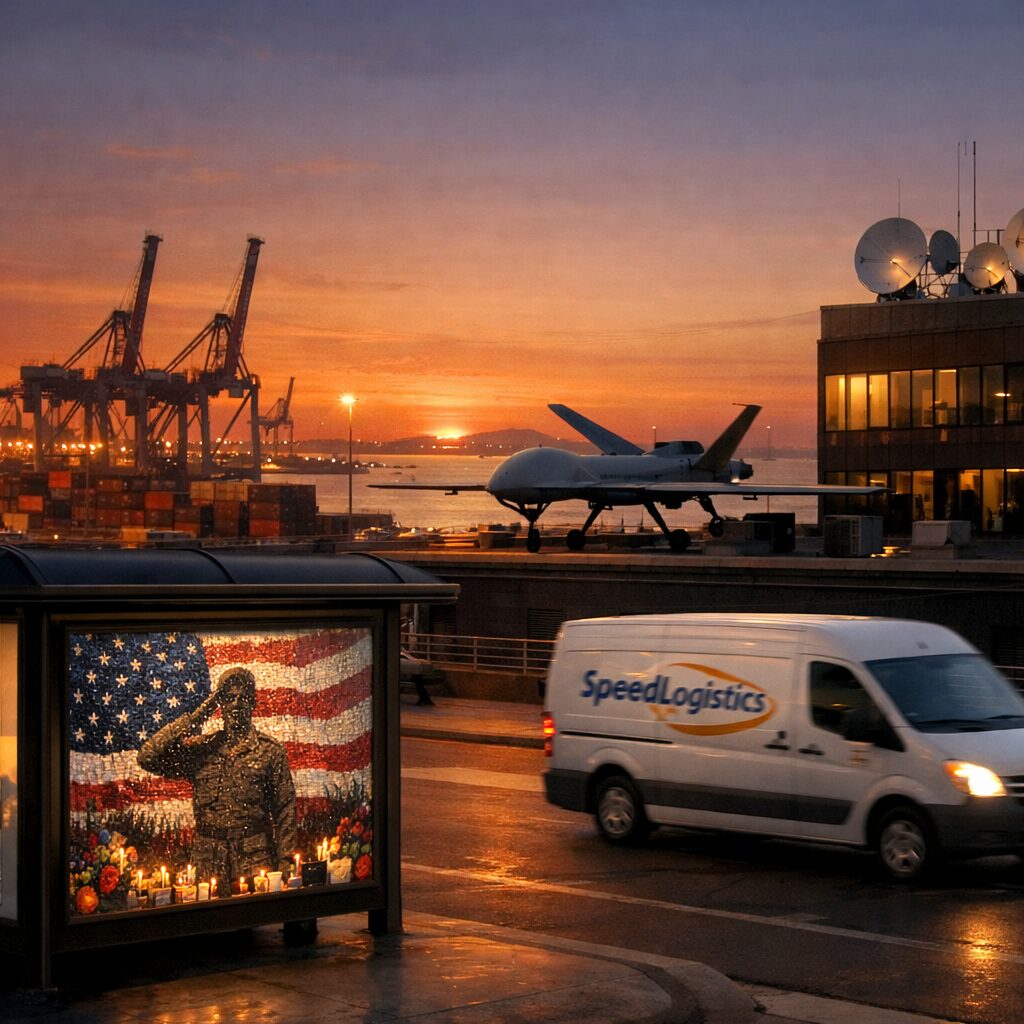
War today is not only about battlefields and casualties; it is an infrastructure — a set of legal, technological and economic scaffolds that quietly reshapes everyday life. Behind the headlines of bombing campaigns and sanctions are procurement contracts, supply-chain rerouting, cybersecurity frameworks and emergency legislative packages that become permanent. Cities upgrade surveillance systems in the name of resilience. Governments centralise data flows claiming national security. Private companies pivot factories from civilian goods to dual-use technologies and do not always revert. These shifts recalibrate power between states and corporations, accelerate surveillance capitalism and normalise emergency governance long after active hostilities end.
Recognising this infrastructure explains why war matters more than many realise: the choices made during conflict — often framed as temporary necessities — tend to ossify into peacetime institutions, altering citizens’ rights, market structures and civic habits for generations.
War as a Fast-Track for Technological Change
Historically, war has compressed decades of technological adoption into years. Today, that fast-tracking is digital and pervasive. Artificial intelligence trained initially for targeting or electronic warfare spills into logistics, public health modelling and finance. Satellite constellations launched under strategic imperatives expand global connectivity and surveillance. Quantum-resistant cryptography, once an academic pursuit, becomes a national security priority that changes how data is stored and shared.
The contemporary surprise is how civilian sectors willingly absorb these technologies because they promise efficiency or profit. Ride-hailing apps adopt route-optimisation algorithms derived from logistics simulations used in conflict zones; hospitals adopt triage AI originally funded for battlefield casualty prediction. This cross-pollination raises ethical and regulatory questions: technology normalised in crisis can entrench asymmetries of power, prioritise speed over accountability, and make wartime trade-offs a default in business and governance.
The Economic Ecosystem of Perpetual Conflict
War fuels an entire economic ecosystem beyond defence contractors: reconstruction consultancies, risk-insurance markets, legal firms specialising in sanctions, and geo-data brokers. Financial instruments — war bonds, emergency tax structures, sovereign asset freezes — ripple through global capital markets. Investors price in geopolitical risk, altering flows of capital into regions and sectors, which in turn shapes development trajectories and political leverage.
Crucially, the economics of modern conflict incentivise longer, murkier engagements. Contractors with long-term service agreements, local elites profiting from reconstruction, and global firms that benefit from instability create feedback loops that make durable peace less immediately profitable. Understanding these incentives reframes war as an economic system with stakeholders whose interests may outlast the declared conflict.
Cultural Remapping: Memory, Identity and Media
War remaps collective identity through narratives, monuments and information architecture. In the digital era, storytelling is accelerated and contested across social platforms, gaming environments and deepfake technologies. Commemorative practices migrate online: virtual memorials, algorithmically curated remembrance, and state-sponsored narratives propagated through targeted ads.
This cultural re-engineering matters because it decides which losses are visible, which victims recognised and which versions of history become teachable. When wartime narratives are monetised or gamified, memory becomes a commodity susceptible to manipulation. The long-term consequence is the shaping of generational identities and grievances that can either heal or entrench cycles of conflict.
Climate, Migration and the New Geography of Conflict
War intersects with climate change and migration to produce a reshaped geopolitical map. Resource scarcity, extreme weather events and sea-level rise compound existing tensions, making some conflicts harder to resolve and creating new ones in previously stable regions. Military planners are forecasting missions for climate-related disasters; defence budgets increasingly fund climate resilience as much as kinetic capability.
Moreover, mass displacement caused by conflict feeds urban pressures in receiving regions, altering labour markets, public services and politics. These demographic shifts reconfigure electoral dynamics, social cohesion and national narratives about belonging. Viewing war through the lens of environmental change reveals why its impact radiates far beyond immediate combat zones and why policy responses must be integrated across security, development and climate governance.
Policy Consequences: Why Awareness Must Lead to Design
If war is a multiplier of systemic change, then policy must move from crisis reaction to anticipatory design. That means embedding sunset clauses into emergency powers, investing in civilian oversight of militarised technologies, and designing supply chains with resilience that does not rely on perpetual emergency logics. It also means regulating the commercialisation of memory and setting standards for ethical technology transfer.
Citizens should care because the legal and technological choices made in wartime become visible in everyday life: privacy erosion, market concentration, and institutionalised inequality. The remedy is democratic literacy about the wartime aftershocks and deliberate design choices that prevent temporary wartime fixes from becoming permanent impositions. For further reading on the institutional afterlives of conflict, see analyses by organisations like the Royal Institute of International Affairs and policy briefs from the Brookings Institution.